Before reaching for anything from the pharmacy shelf, it’s worth asking: is there a gentler way to get things moving?
For a lot of people, the answer starts with what’s already in the kitchen — and what’s been part of traditional medicine for centuries. Here’s a look at the foods, habits, and herbal options that support comfortable, regular elimination naturally.
Start With Hydration
This is the foundation everything else builds on. Stool becomes hard and difficult to pass when too much water gets reabsorbed from it in the colon. If you’re not drinking enough water, nothing else on this list will work as well as it could.
A simple way to think about it: if you’re increasing fiber (from food or a supplement), you need to increase water right alongside it. Fiber without enough water can actually make things feel worse, not better.
Foods That Support Comfortable Elimination
Some foods have an outsized reputation for a reason. A few worth knowing about:
- Prunes and prune juice — one of the most well-researched foods for supporting regular bowel movements. They contain both fiber and sorbitol, a natural sugar alcohol that draws water into the colon.
- Kiwi — rich in fiber and an enzyme called actinidin that supports gut motility. Some research suggests one or two kiwis a day can make a noticeable difference.
- Pears — high in sorbitol and fiber, similar mechanism to prunes.
- Flaxseed — soluble fiber that adds both bulk and softness to stool. Ground flaxseed is more digestible than whole seeds.
- Leafy greens and other magnesium-rich foods — magnesium plays a role in muscle function throughout the digestive tract. Foods that contain fiber and are a good source of magnesium include leafy greens, nuts, seeds, legumes, and whole grains.
None of these work overnight. But built into a regular diet, they shift your baseline over time.
Habits That Help
A few daily habits make a real difference, and they’re free:
- Drink water throughout the day — especially if you’re increasing fiber.
- Move your body. Even a daily walk supports healthy gut motility. A sedentary day is one of the most common (and overlooked) contributors to sluggish elimination.
- Don’t hold it. Responding to the urge when it comes — rather than waiting for a “better time” — helps keep things on a regular rhythm. Repeatedly ignoring the urge can make the urge itself less reliable over time.
- Build a routine. Many people find that a consistent time of day (often morning, after the first meal or coffee) trains the body toward regularity.
Herbal and Botanical Approaches
Long before the pharmacy aisle existed, traditional medicine systems had their own approaches to supporting elimination — and many of them centered on bitter herbs.
Bitter herbs have been used for centuries in Traditional Chinese Medicine, Ayurveda, and Western herbalism to support the body’s own digestive processes. The idea is different from how most over-the-counter products work: instead of adding a synthetic ingredient or pulling water osmotically from outside, bitter herbs support the body’s own production of the fluids that naturally soften stool and keep things moving.
This is where Diju comes in.
Diju: A Natural Stool Softener Rooted in Traditional Chinese Medicine
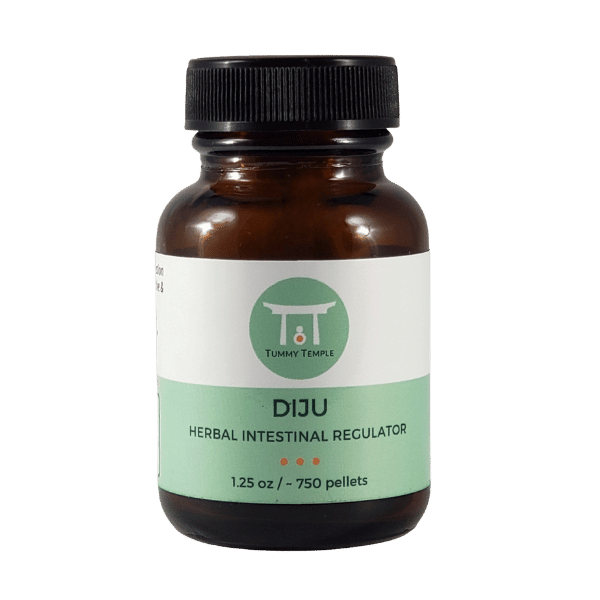
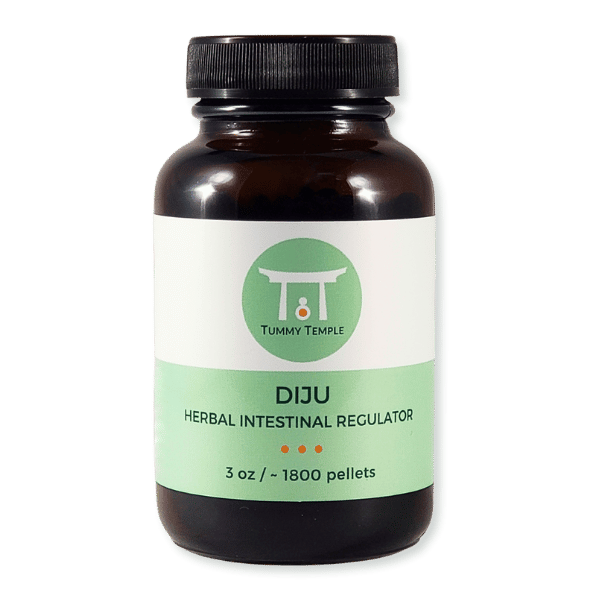
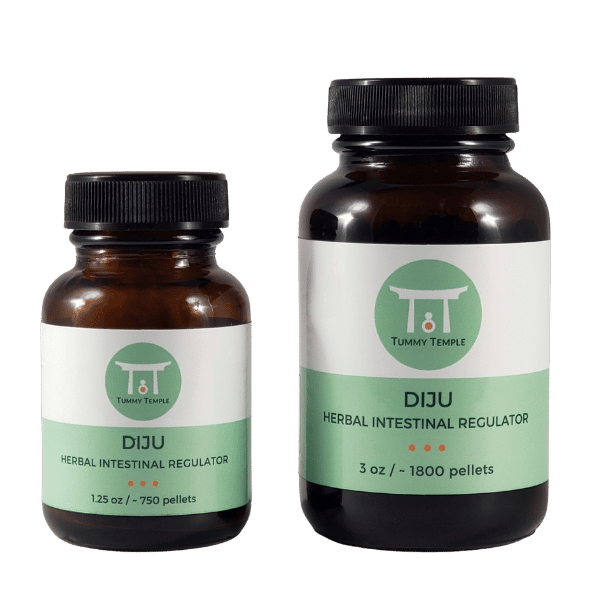
Diju is Temple Natural Health’s natural stool softener, formulated from a blend of TCM-rooted ingredients including Baikal Skullcap Root, Chinese Rhubarb Root, Aloe Vera Leaf, Dong Quai, Cape Jasmine Fruit, and Coptis Root, bound together with raw honey. It’s been refined over more than 25 years of naturopathic clinical practice.
Rather than working against the body, Diju is designed to work with it — supporting the body’s natural production of digestive fluids, which helps soften stool and supports comfortable, regular elimination. Many people find it relieves occasional constipation effectively but gently, without the cramping or urgency that can come with stronger stimulant laxatives.
Diju is flexible by design. The serving size can be adjusted to fit your needs — a smaller amount for daily support, more when extra support is helpful, and many people find it works best taken on an empty stomach.
Building a Natural Routine
None of these approaches work in isolation — and they’re not meant to. Hydration makes fiber more effective. Fiber and movement work better together than either alone. And herbal formulas like Diju are designed to be part of a daily routine, not a one-time fix.
A simple way to think about layering them:
- Foundation: water, movement, and a consistent routine — every day, regardless of anything else.
- Food-based support: prunes, kiwi, flaxseed, and magnesium-rich foods, woven into meals you’re already eating.
- Herbal support: a formula like Diju, for steady, reliable support that works alongside the habits above.
The Bottom Line
A natural approach to comfortable elimination isn’t about finding one magic fix — it’s about layering hydration, food, movement, and (for many people) an herbal formula like Diju into a routine that supports your body’s own rhythm.
If you’re ready to add an herbal option to your routine, Diju is Temple Natural Health’s natural stool softener — built on more than 25 years of naturopathic clinical practice. For more on how stool softeners work and how the different types compare, see our Stool Softener Guide.