Travel constipation is so common it's practically a rite of passage. You leave home, your gut shuts down, and things don't get back to normal until a day or two after you return — if you're lucky. It's not a coincidence, and it's not just in your head. Travel manages to hit almost every constipation trigger at once, which is why it's so reliably disruptive.
Why It Happens
Your routine gets scrambled. The gut runs on a body clock. It learns when you wake up, when you eat, when you move, and it times its own activity accordingly. Travel — especially across time zones — throws those cues into disarray. Your digestive system doesn't know when to expect a meal or when to initiate a bowel movement, so it defaults to waiting. Often for longer than you'd like.
You get dehydrated. Airplane cabins have notoriously low humidity — typically under 20%, compared to the 30–50% most people are used to at home. Your body loses moisture through breathing and skin just sitting in that environment, often without feeling noticeably thirsty. Add coffee or alcohol at the airport and the dehydration compounds. A drier colon produces harder, slower-moving stool.
The food is different. Airport terminals and roadside stops are not exactly fiber paradise. The food available during travel tends to be processed, low in vegetables, and high in refined carbohydrates — exactly the combination that slows transit. Even good hotels don't always make it easy to eat the way you would at home. A few days of unfamiliar, low-fiber eating is enough to slow things down noticeably.
You're sitting for hours. Physical movement directly stimulates intestinal motility. Sitting in a plane seat, a car, or a departure lounge for extended periods removes that stimulus entirely. The gut, like the rest of the body, slows down when you do.
You ignore the urge. Unfamiliar bathrooms, shared spaces, mid-flight inconvenience, a packed itinerary — travel creates endless reasons to suppress the urge to go when it arrives. Every time you do, stool sits in the colon a little longer and loses a little more water. By the time you're near a comfortable bathroom, what was manageable has become difficult.
You're stressed and undersleeping. Even exciting travel involves disrupted sleep and low-grade stress. Both activate the sympathetic nervous system and slow digestion. The gut doesn't distinguish between good stress and bad stress — it just responds to the elevated state the same way.
What to Do About It
The most effective approach is to get ahead of it rather than react to it. Before you leave, make sure you're well-hydrated and have been eating enough fiber. During travel, drink more water than you think you need, walk around when you can (even a few laps of the terminal helps), eat the highest-fiber options available, and go when you feel the urge rather than waiting for a more convenient moment. A consistent sleep and meal schedule on arrival — even if it means pushing through some jet lag — helps reset the gut clock faster.
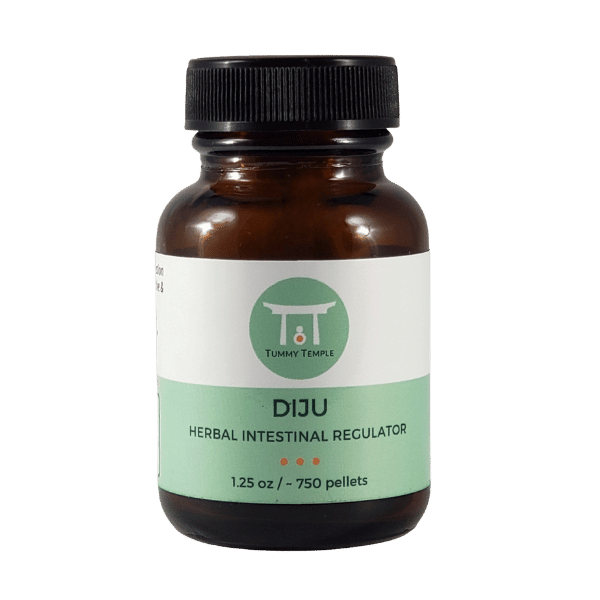
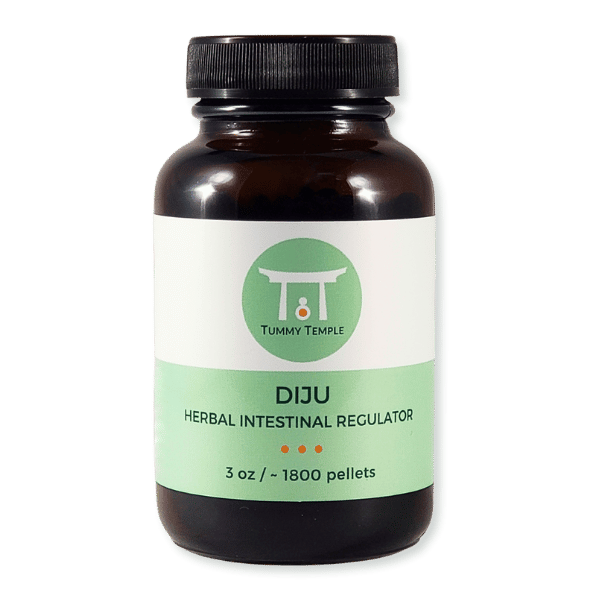
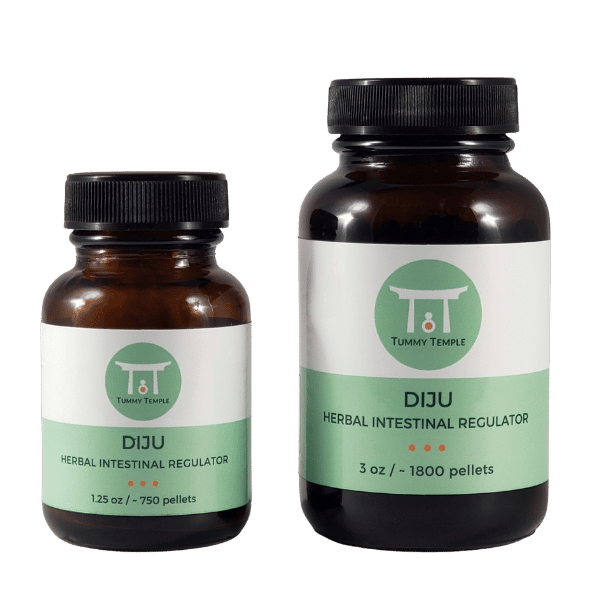
For those who want a little extra support while traveling, Diju is easy to pack and take on the road — just a small amount of our herbal digestive formula that supports comfortable, regular elimination without urgency or disruption. Natural Approaches to Supporting Regularity has a broader look at the dietary and lifestyle approaches that help most.
Bottom Line
Travel constipation isn't random — it's the predictable result of disrupted routine, dehydration, low-fiber food, prolonged sitting, ignored urges, and poor sleep all converging at once. Knowing that makes it easier to prevent: address two or three of those factors proactively and the gut tends to hold up much better. For more on what causes constipation in general, What Causes Constipation? Common Triggers Explained covers all the contributing factors in one place.