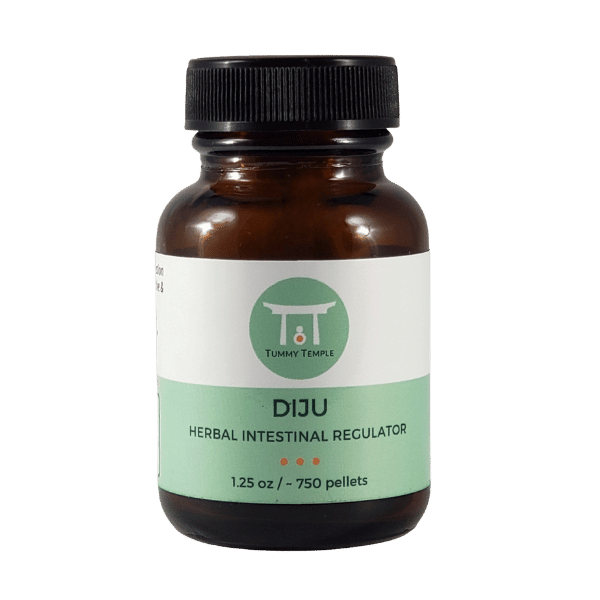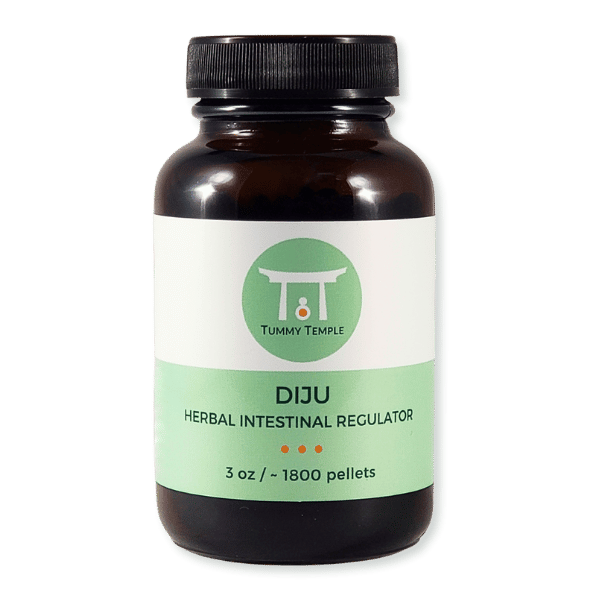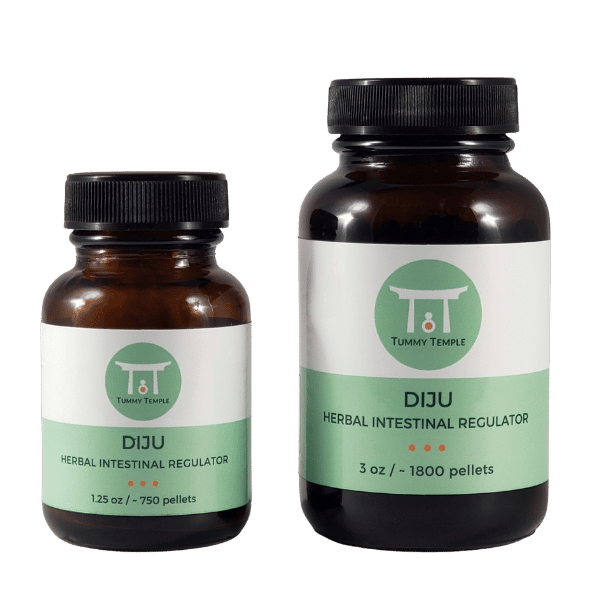
If you’ve read How Stool Softeners Work, you know that “stool softener” isn’t one single mechanism — it’s a category, and different products get to the same destination by different routes.
So where does Diju fit? It’s not just softener. Here’s a closer look at what’s actually happening when you take it, and how you can adjust its strength and your body's response..
What’s In a Name
Diju’s name isn’t just a brand — it’s a clue to how it works. “Di-Ju” is shorthand for digestive juices: the body’s own breakdown and lubrication fluids that keep things moving comfortably through the digestive tract.
That name reflects the formula’s foundational approach. Rather than introducing a harsh synthetic ingredient to force a reaction, Diju is built around a blend of bitter herbs with deep roots in Traditional Chinese Medicine—herbs traditionally used to support the body’s own production of these digestive fluids. (For the full ingredient breakdown, see What’s In Diju?)
The Mechanism: Dose-Dependent Power
While Diju works in harmony with your body, don't mistake "natural" for "weak." The formula is highly effective, and its strength depends on how much you take. By adjusting your dosage, Diju can shift from a daily structural toner to a robust functional accelerator.
1. For Daily Support & Toning (Smaller Amounts)
Taken consistently in smaller amounts, Diju acts to astringe (tighten) and tone (strengthen) the intestinal walls.
-
It supports the body’s natural digestive secretions—the foundation everything else builds on.
-
With more of those natural fluids present, stool becomes softer and the path through the colon becomes easier to navigate.
-
Rather than causing dependency, this smaller daily dose actually helps train your system, positioning your body to better do what it’s already trying to do.
2. For Extra Help When You Need It (Larger Amounts)
When things are stubbornly backed up and you need an immediate response, increasing your intake unlocks Diju's stronger side. A larger amount accelerates bowel function and creates a distinct "push" to support a faster, thorough clearing of the colon.
How Diju Compares to Standard Laxatives
The key difference between Diju and a conventional stimulant laxative comes down to how the result happens.
Standard stimulant laxatives violently force the bowel muscles to contract, which is why they frequently cause severe cramping, sudden urgency, and lazy bowels over time.
Diju offers a smarter, scalable alternative. At any dose, it works by optimizing conditions—maximizing digestive fluids, lubricating the tract, and mobilizing the colon. You get the reliable results and clearing power of a stronger laxative when you scale up, but without overriding or damaging your body's natural signals.
Dialing In Your Dose
Because Diju is uniquely responsive to dosage, it is designed to be highly flexible:
-
Finding Your Baseline: Diju is taken in small, adjustable amounts—typically starting around 1/4 teaspoon. Many people find it works significantly stronger when taken on an empty stomach.
-
The Routine: For a steadier, more predictable daily rhythm, a smaller amount helps tone the gut with consistent use.
-
The Quick Fix: For an emergency fix to clear out a stubborn backup, a larger amount delivers the robust, accelerating push required to get the job done quickly.
The Bottom Line
Diju works by supporting something your body already does — producing the digestive juices that keep stool soft and things moving. Diju works by meeting your digestion exactly where it's at. Whether you need a gentle daily toner to strengthen your system or a stronger push to move your colon, Diju isn't about overriding your digestion, it’s about giving it what it needs to do its job.
For the full picture on stool softeners as a category, including how Diju compares to other options, see our Stool Softeners: The Ultimate Guide.