If you’re considering an herbal formula, it’s natural to want to know exactly what’s in it — not just the marketing description, but the actual ingredients and where they come from.
Diju is built from a small list of herbs with deep roots in Traditional Chinese Medicine (TCM), refined over more than 25 years of naturopathic clinical practice. Here’s a closer look at what’s in the formula and why.
A Formula, Not a Single Ingredient
One of the first things to understand about Diju is that it’s a formula — a blend of several herbs working together — rather than a single isolated compound.
This is a defining feature of traditional Chinese herbalism. Rather than relying on one ingredient to do all the work, TCM formulas typically combine several herbs, each contributing something to the overall effect. The combination is considered as important as any individual herb in it.
The Ingredients in Diju
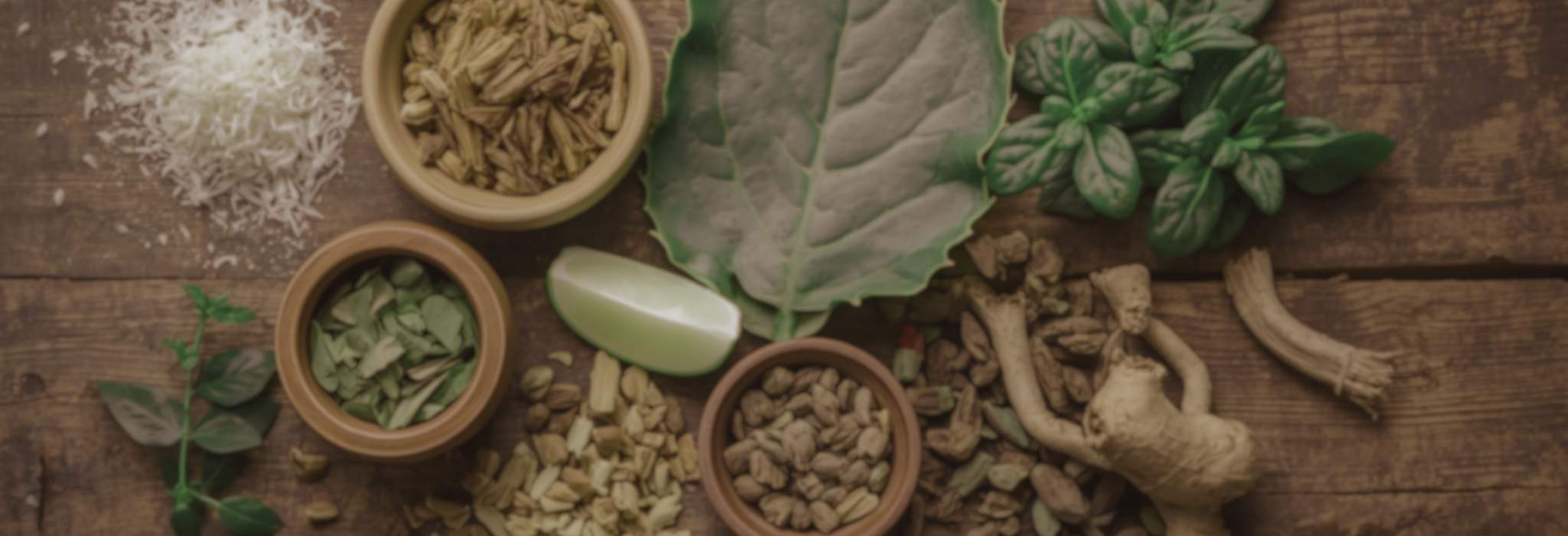
Here’s what goes into the formula:
- Baikal Skullcap Root — A bitter root with a long history in Chinese herbal traditions, often included in formulas aimed at supporting overall digestive balance.
- Chinese Rhubarb Root — One of the most widely recognized bitter herbs in Chinese herbalism, long valued for its traditional role in supporting the body’s natural elimination process.
- Aloe Vera Leaf (non-laxative form) — Used here in a form that doesn’t carry aloe’s laxative compounds. It’s included for its traditional reputation as a soothing, calming botanical.
- Dong Quai — Sometimes called “female ginseng,” Dong Quai is a staple of Chinese herbalism with a long history of use in formulas aimed at supporting overall balance in the body.
- Cape Jasmine Fruit — A bitter fruit used in traditional formulas, often associated with supporting a sense of calm and internal balance.
- Coptis Root — One of the most bitter herbs used in Chinese medicine, included in formulas for centuries to support healthy digestive function.
- Raw Honey — Serves as the natural binder that holds the formula’s pellets together. Honey also has its own long history in traditional remedies as a gentle, soothing ingredient.
Each of these has been used in Chinese herbal traditions for generations — Diju brings them together in a single, refined formula.
Why Bitter Herbs?
You’ll notice a theme: most of the herbs in Diju are classified as “bitter” in TCM terms. That’s not an accident.
Bitter herbs have a long-standing role in traditional medicine systems — not just in TCM, but in Ayurveda and Western herbalism too — as a way of supporting the body’s own digestive processes. The idea is to work with the body’s natural rhythm rather than introducing something foreign that overrides it.
This is part of what sets herbal formulas like Diju apart from many over-the-counter options, which tend to rely on synthetic ingredients or osmotic agents to do the work directly. (For more on how these different approaches compare, see How Stool Softeners Work.)
The Role of Honey
Raw honey might seem like an odd ingredient to highlight, but it plays two roles in Diju. Practically, it’s the binder that holds the pellet form together — without it, you’d have a jar of loose powder rather than the small pellets the formula is known for.
Beyond that, honey has its own long history as a soothing addition to herbal remedies, valued in traditional medicine for centuries.
How Diju Is Taken
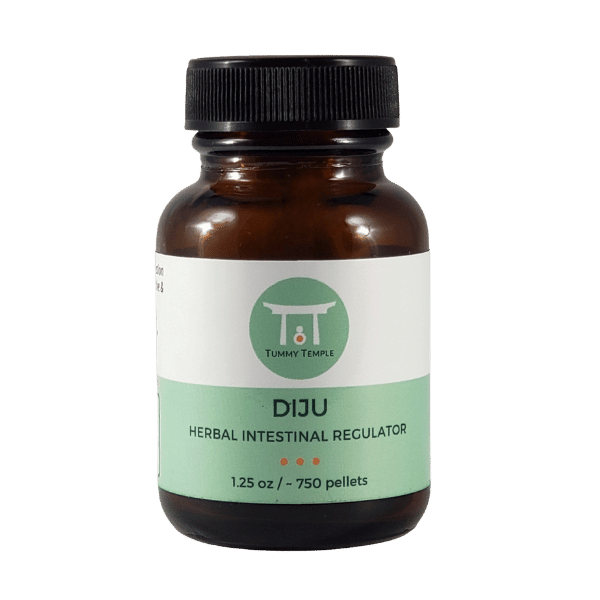
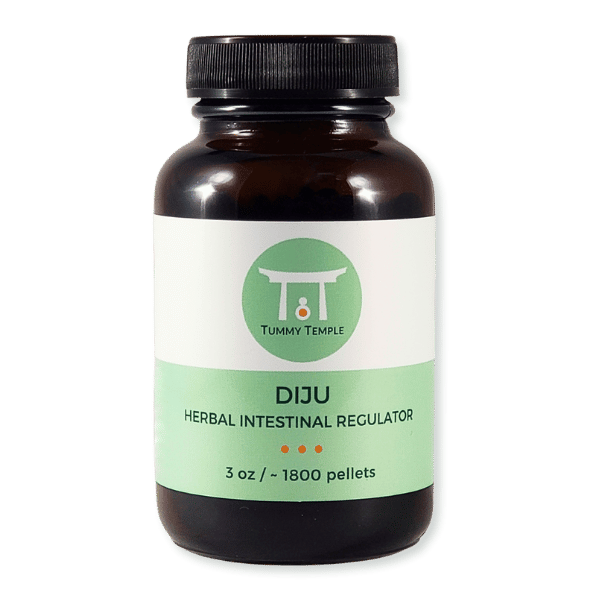
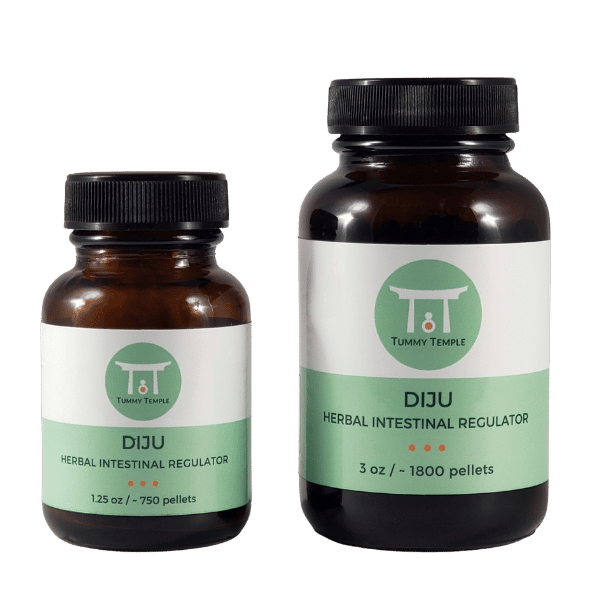
Diju comes in pellet form (also called tea pills), available in two sizes (approximately 750 or 1,800 pellets per container, depending on which you choose). The serving size is flexible — typically starting around 1/4 teaspoon (about 20 pellets) and adjustable up to about 1.5 teaspoons per day, depending on what your body needs.
Many people find taking it on an empty stomach supports a stronger effect, though this can vary from person to person. As with any new supplement, it’s worth starting on the lower end and adjusting from there.
Where to Learn More
Knowing what’s in a formula is one piece of the picture. For a closer look at how these ingredients come together to actually do something in the body, see How Diju Works. And for the bigger picture on stool softeners as a category — including how Diju compares to other options — see our Stool Softener: The Ultimate Guide.
The Bottom Line
Diju is a TCM-rooted blend of bitter herbs — Baikal Skullcap Root, Chinese Rhubarb Root, Aloe Vera Leaf, Dong Quai, Cape Jasmine Fruit, and Coptis Root — bound together with raw honey. Each ingredient has its own long history in traditional herbalism, and the formula brings them together based on more than 25 years of naturopathic clinical refinement.
If you’re curious to try it, Diju is available in two sizes to fit your routine.