Back pain and constipation showing up at the same time isn't a coincidence — for a lot of people, they're directly related. The connection makes more sense once you understand the anatomy involved: the colon sits remarkably close to the spine and the surrounding muscles and nerves, and when it's backed up, the effects can extend well beyond the abdomen.
Here's why the two are connected, what constipation-related back pain typically feels like, and how to tell when back pain deserves its own attention.
Why Constipation Can Cause Back Pain
Pressure from a Full Colon
The large intestine runs through the abdominal cavity in a frame-like loop, with portions running up the right side of the abdomen, across the top, and down the left side before ending at the rectum. When stool accumulates and gas builds up alongside it, the colon distends — and that distension puts pressure on the structures around it, including muscles, ligaments, and nerves that extend into the lower back.
This is particularly common in the lower left side of the back, where the descending colon and sigmoid colon sit close to the lumbar spine. When that section is full, the referred pressure can register as a dull, achy feeling in the lower back.
Referred Pain Through Shared Nerve Pathways
The gut and the lower back share overlapping nerve pathways. When the bowel is distended or under strain, pain signals can travel along these shared routes and be interpreted by the brain as coming from the back rather than the colon. This is the same mechanism behind other forms of referred pain — discomfort originating in one place but perceived in another.
Muscle Strain from Straining
Repeated or prolonged straining during a bowel movement engages the abdominal and lower back muscles in ways they're not designed for on a sustained basis. Over time, or during a particularly difficult episode, this can cause genuine muscular fatigue or soreness in the lower back — a separate but related source of discomfort on top of the referred pressure.
Bloating and Gas Pressure
When transit slows, gas produced by bacterial fermentation in the colon has more time to accumulate. The resulting bloating increases pressure throughout the abdominal cavity, which can radiate into the lower back and create a general sense of heaviness or aching that's hard to localize precisely.
What Constipation-Related Back Pain Typically Feels Like
The back pain associated with constipation is usually dull and diffuse rather than sharp and specific. It tends to be concentrated in the lower back — often on the left side, following the path of the sigmoid colon — though it can also be central or bilateral. It may worsen as the day goes on, especially if you've been sitting for long periods, and it often improves noticeably after a bowel movement.
It generally doesn't radiate down the leg (which would suggest nerve involvement from a spinal source), and it's usually not triggered or worsened by particular movements the way a muscle injury or disc issue would be.
How to Tell If Constipation Is the Cause
A few questions can help clarify whether back pain is likely coming from constipation or from something else:
Did the back pain arrive around the same time as changes in your bowel habits? Does it ease after you have a bowel movement? Is there bloating or abdominal fullness alongside it? Is the pain dull and hard to pin down rather than sharp and localized? Have there been no injuries, new physical activities, or awkward movements that might explain it?
If the answers are mostly yes, constipation is a reasonable explanation to investigate first. Improving elimination often resolves the back discomfort alongside it.
When the Back Pain Deserves Its Own Evaluation
Constipation can absolutely cause back pain — but back pain can also exist independently and coincide with constipation by chance, or have its own cause that needs attention. There are some situations where back pain warrants a medical conversation regardless of what's happening in the gut.
Pain That Persists After Constipation Resolves
If your bowel habits return to normal but the back pain doesn't improve, that's a signal the pain may not be coming from the gut. It's worth investigating the back separately at that point.
Sharp, Severe, or Radiating Pain
Constipation-related back pain is typically dull and diffuse. Pain that is sharp, severe, or radiating down one or both legs suggests nerve involvement and deserves prompt evaluation — that pattern is more consistent with a spinal source.
Pain Accompanied by Fever, Urinary Symptoms, or Flank Pain
These combinations can indicate a kidney or urinary tract issue rather than a digestive one. Pain in the flank (the sides of the lower back, near the kidneys), especially if accompanied by fever or changes in urination, should be evaluated promptly.
New or Unexplained Pain Without an Obvious Digestive Connection
Back pain that arrives without any accompanying digestive symptoms and doesn't fit the pattern described above is better evaluated on its own merits rather than attributed to constipation.
Addressing the Constipation
If constipation is the likely driver, addressing it directly is the most efficient path to relieving both the digestive and back discomfort. The foundation is the same as it always is: more fiber-rich food, adequate hydration, regular movement, and a consistent routine. What Causes Constipation? Common Triggers Explained covers the most common contributing factors, and Natural Approaches to Supporting Regularity walks through the full range of options from diet to lifestyle to herbal support.
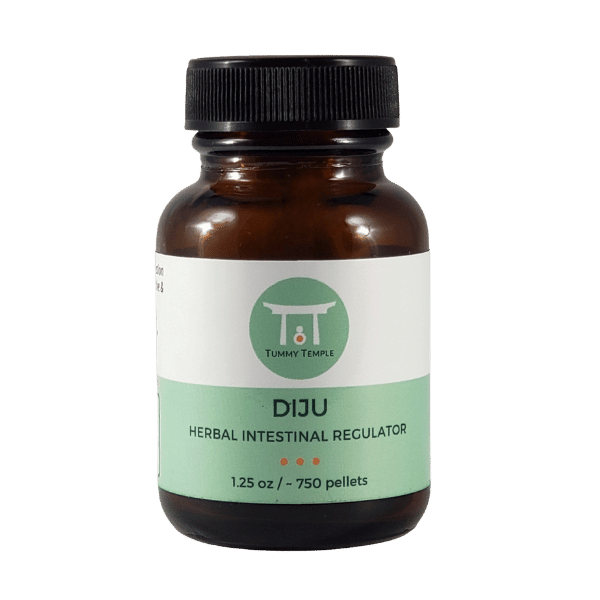
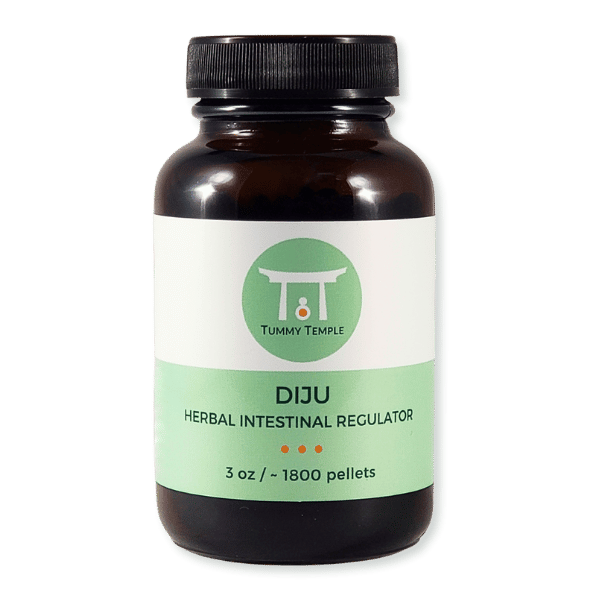
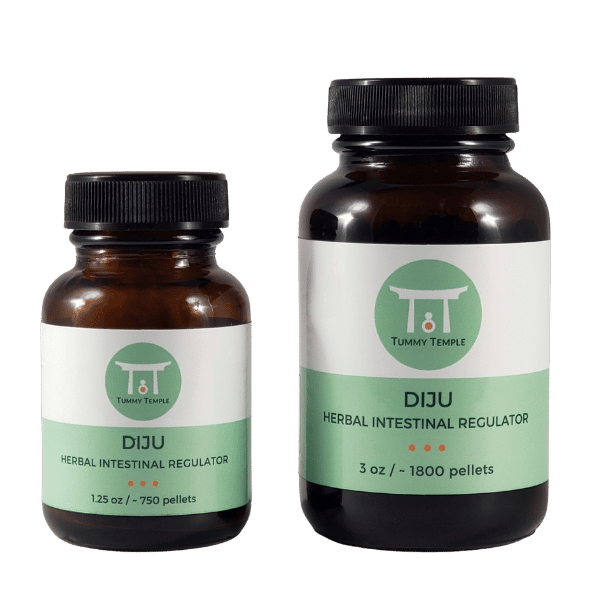
For those looking for a little extra support alongside those basics, Diju is a botanical formula, inspired by traditional Chinese medicine, that supports comfortable, regular elimination. If constipation is what's driving the back discomfort, addressing the gut is the most direct path to relief — and Diju is a gentle way to support that process.
Bottom Line
Constipation and lower back pain are connected in several ways — pressure from a distended colon, referred pain through shared nerve pathways, and muscle strain from repeated straining are all contributing mechanisms. The back pain that comes from constipation is typically dull, lower, and left-sided, and it tends to improve after a bowel movement. When it doesn't follow that pattern — or when it persists after constipation resolves — it deserves its own evaluation. When in doubt, talk to a healthcare provider who can assess both things together.
For a complete overview of occasional constipation and how to support healthy elimination, visit Constipation Relief: The Ultimate Guide.