Almost everyone deals with occasional constipation at some point — a few uncomfortable days where things just don’t move the way they usually do. It’s one of the most common digestive complaints there is, and in most cases, it’s also temporary and manageable.
This guide walks through what occasional constipation actually is, what tends to cause it, which symptoms are worth paying attention to, and the lifestyle, dietary, and natural approaches that may help support regularity. Think of it as a starting point — each section links to a deeper dive if you want more detail.
What Is Constipation?
There’s no single definition that fits everyone, because “regular” looks different from person to person. In naturopathic medicine, having a bowel movement anywhere from one to three times a day is the range considered optimal for healthy adults.
Generally, occasional constipation describes a temporary change from your usual pattern — fewer bowel movements than normal, stools that are harder or more difficult to pass, or a sense of incomplete elimination. If you want a more detailed breakdown of what counts as “regular” — including the Bristol stool chart, explained in plain language — see What Counts as Constipation?.
The key word here is occasional. Most people experience this from time to time, and for most people, it resolves on its own or with a few simple adjustments.
What Causes Occasional Constipation?
Constipation usually isn’t caused by one single thing — it’s often a combination of factors that, together, slow things down. Some of the most common contributors include:
- Not enough fiber in the diet
- Not drinking enough water — fiber needs water to do its job
- Sitting for long periods, or a drop in regular movement
- Changes to routine — new schedules, disrupted sleep, or being away from home
- Stress, which affects digestion more than many people realize
- Ignoring the urge to go, which over time can affect the body’s signaling
Travel deserves a special mention here — the combination of a new routine, different food, less movement, and unfamiliar bathrooms is a near-perfect recipe for occasional constipation, which is why it’s such a common complaint for travelers. (See Why You Get Constipated When You Travel for tips specific to that situation.)
Stress is another contributor that’s easy to overlook. The gut and the nervous system are closely connected, and periods of high stress can show up physically as digestive changes. For more on that connection, see How Stress Affects Digestion and Elimination.
For a closer look at all of these triggers — and a few less obvious ones — see What Causes Constipation? Common Triggers Explained.
Common Symptoms — and When to Pay Attention
Occasional constipation can show up as:
- Going less often than your usual pattern
- Stools that are hard, dry, or difficult to pass
- Straining
- A bloated or “backed up” feeling
- A sense that you haven’t fully finished
For most people, these symptoms ease up within a few days, especially with some of the dietary and lifestyle adjustments below.
It’s also worth knowing that constipation can sometimes show up in unexpected ways — including as back discomfort. If you’ve ever wondered whether the two are related, see Constipation and Back Pain: What’s the Connection?.
That said, it’s worth checking in with a healthcare provider if symptoms last more than a couple of weeks, if you notice blood, unexplained weight loss, or significant pain, or if constipation is a new and ongoing change for you. A quick conversation with a provider can help rule out other explanations and point you toward the right next step. For a more detailed walkthrough of symptoms and when they warrant a closer look, see Constipation Symptoms: When It’s Just Slow and When to See a Doctor.
Diet and Lifestyle Basics
For many people, the foundation of supporting regular elimination comes down to a handful of everyday habits.
Fiber. Both soluble fiber (found in oats, beans, and fruit) and insoluble fiber (found in whole grains and vegetable skins) play a role in healthy digestion — though more isn’t always better, especially if you’re increasing intake quickly. For a full breakdown of which foods help and which to watch, see Foods That Support Healthy Elimination (and Foods to Watch).
Hydration. Fiber absorbs water as it moves through the digestive tract — without enough fluid, added fiber can sometimes make things feel worse rather than better. For ideas beyond plain water, including which beverages tend to help (and which might not), see Drinks That Support Healthy Bowel Function.
Movement. Physical activity — even a daily walk — can help support the body’s natural rhythm. You don’t need an intense workout; consistency tends to matter more than intensity.
Routine. Many people find that giving themselves a consistent, unhurried window each day — often after a meal, when the digestive system is naturally more active — helps the body settle into a predictable pattern.
Natural Approaches to Supporting Regularity
Beyond the day-to-day basics, many people look to natural approaches — herbal traditions, gentle supplements, and home remedies — for additional support, especially during a stretch of occasional constipation.
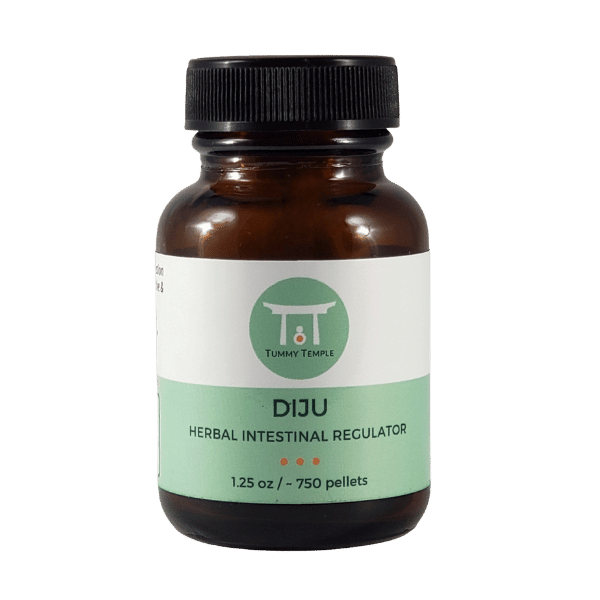
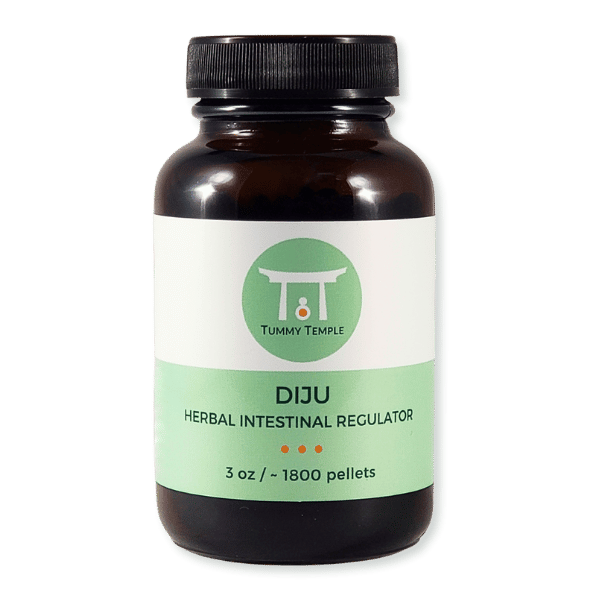
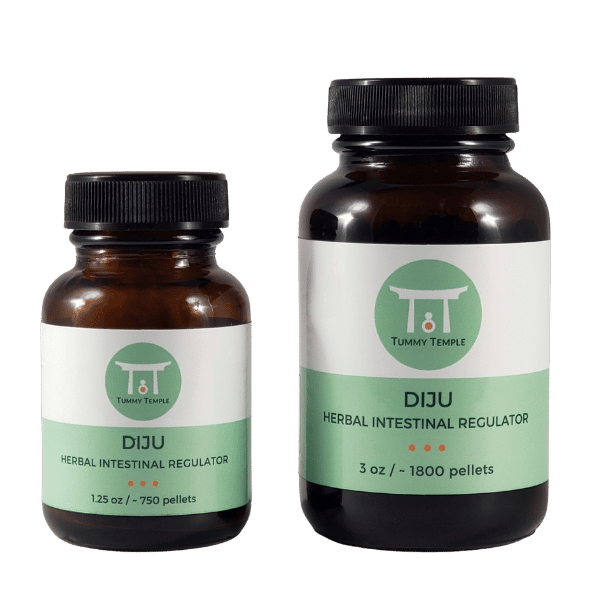
These range from simple kitchen staples to herbal formulas with roots in traditional practices. One example is Diju, a Temple Natural Health formula built on a Traditional Chinese Medicine combination of herbs — including Baikal Skullcap Root, Chinese Rhubarb Root, Aloe Vera Leaf, Dong Quai, Cape Jasmine Fruit, and Coptis Root, bound with raw honey — designed to support the body’s own digestive processes rather than override them.
For a full rundown of natural and herbal approaches to supporting regularity — including where Diju fits in — see Natural Approaches to Supporting Regularity.
Supplement Approaches: Probiotics, Magnesium, and Fiber
A few supplement categories come up often in conversations about regularity:
- Probiotics, which support the balance of bacteria in the gut
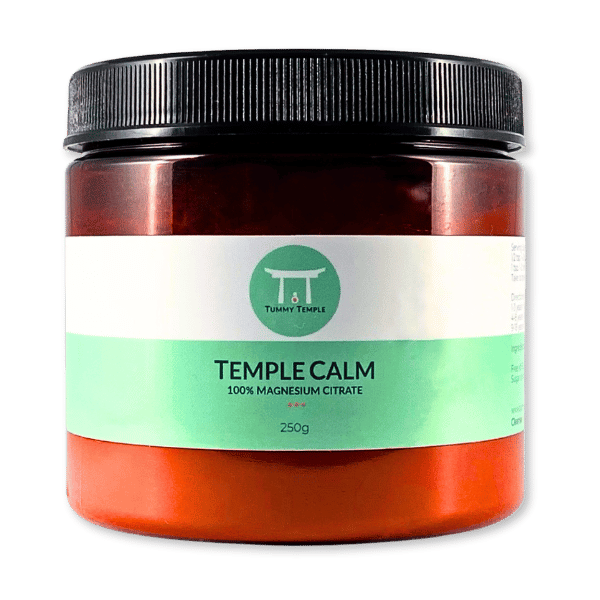
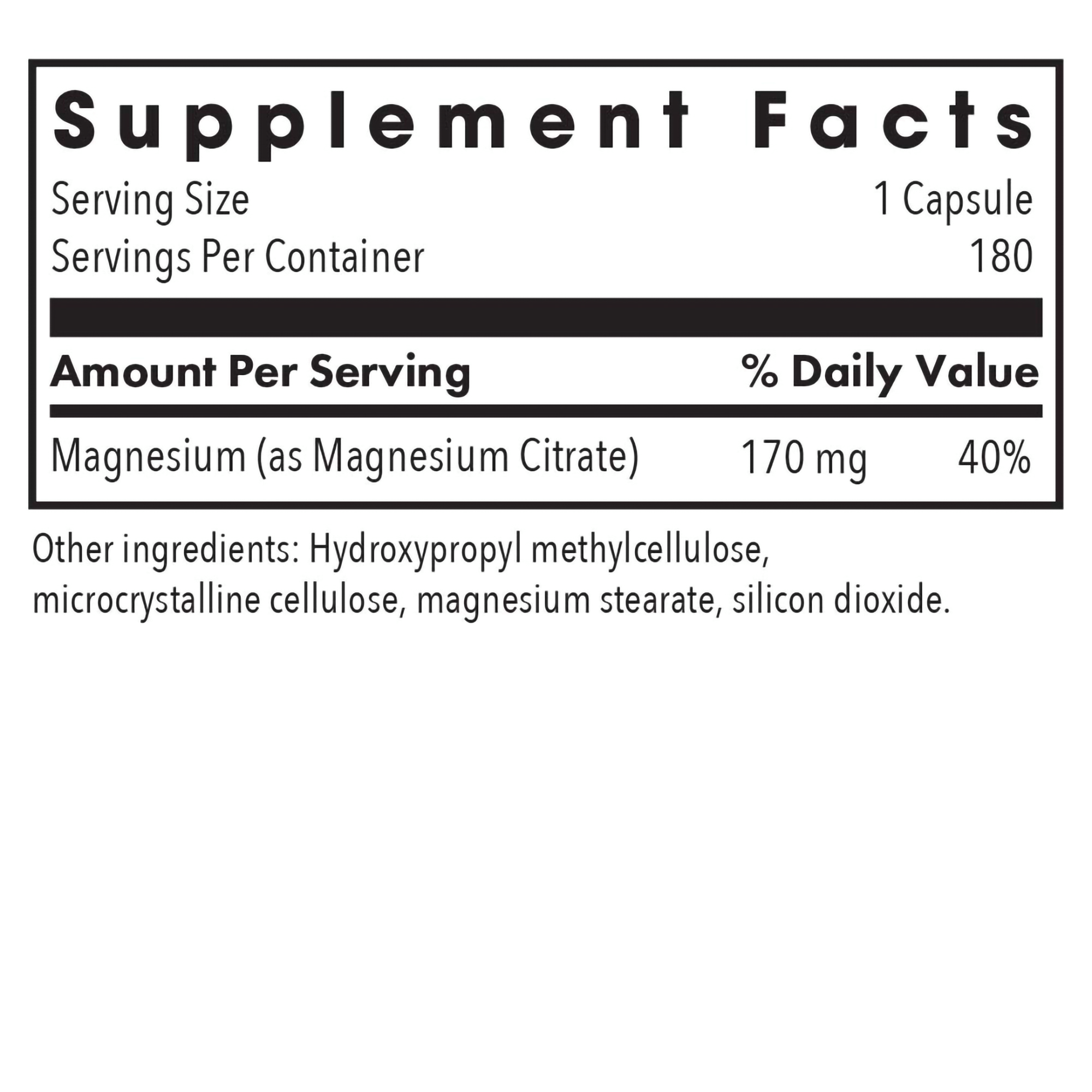
- Magnesium, which has an osmotic effect that draws water into the colon
- Fiber supplements, like psyllium husk, which add bulk to stool
Each works through a different mechanism, and what works well for one person may not be the right fit for another — it often comes down to some experimentation. For a closer look at how each of these works, see Probiotics, Magnesium, and Fiber: Supplement Approaches to Regularity.
When to Talk to a Healthcare Provider
Occasional constipation is, for most people, exactly that — occasional. But it’s worth talking to a healthcare provider if it becomes a regular part of your life, if you notice new or unusual symptoms, or if the adjustments above don’t seem to help. A provider can help rule out other explanations — including certain medications — and offer guidance specific to your situation. (If you’re curious whether something you’re taking could be a factor, see Medications That Can Cause Constipation.)
The Bottom Line
Occasional constipation is one of the most common digestive complaints there is, and for most people, it’s manageable with attention to fiber, hydration, movement, and routine. When lifestyle basics aren’t quite enough on their own, natural approaches and certain supplements, such as Diju, can offer additional support.
And if anything ever feels different than usual, persistent, or concerning, a healthcare provider is always the right resource. Most of the time, though, a few small, consistent changes are all it takes to help things get back on track.