Most people have felt it at some point — the stomach that tightens before a difficult conversation, the digestive system that shuts down on a travel day, the sluggish week that follows an especially demanding stretch at work. The gut-stress connection isn't just in your head. It's physical, it's measurable, and it goes in both directions.
Understanding what's actually happening when stress affects your digestion makes it easier to respond to it — and easier to be patient with yourself when things don't move the way they should.
The Gut-Brain Axis
The gut and the brain are connected by an extensive, bidirectional communication network often called the gut-brain axis. At the center of it is the vagus nerve — the longest cranial nerve in the body, running from the brainstem all the way into the abdomen — along with a dense network of neurons embedded in the gut wall known as the enteric nervous system. The enteric nervous system contains roughly 500 million neurons, more than the spinal cord, which is why it's sometimes called the "second brain."
This system doesn't just receive signals from the brain — it sends them back. Research suggests that the majority of communication along the vagus nerve actually flows upward, from gut to brain, rather than downward. The gut monitors what's happening inside and reports continuously. When the gut is unhappy, the brain often registers it as mood, anxiety, or unease. When the brain is under stress, the gut feels it almost immediately.
What Stress Does to Digestion
When the brain perceives stress — whether it's a physical threat, an emotional challenge, or simply a packed calendar — it triggers the sympathetic nervous system, commonly known as the fight-or-flight response. This state redirects blood flow toward the muscles and heart, releases cortisol and adrenaline, and deprioritizes any function the body considers non-essential in a crisis. Digestion is high on that non-essential list.
In practical terms, stress can slow gastric emptying (how quickly food moves from the stomach into the small intestine), reduce the muscular contractions that move material through the colon, alter the balance of bacteria in the gut microbiome, and change how the gut wall absorbs fluid — all of which affect both the consistency of stool and the speed at which it travels.
Why Stress Can Cause Constipation
For many people, the predominant effect of stress on the gut is slowing things down. When the sympathetic nervous system is dominant, peristalsis — the wave-like muscular contractions that move stool through the colon — becomes less active. Material moves more slowly, spends more time in the colon, loses more water, and arrives harder and drier than it should. The result is the sluggish, incomplete elimination that often follows a demanding week, a long flight, or a period of sustained anxiety.
This is also part of why constipation tends to cluster around predictable life events: starting a new job, traveling, preparing for something important, or navigating ongoing stress at home or work. It's not random — it's the gut responding to cues from the nervous system.
Why Stress Can Cause the Opposite for Others
Stress doesn't affect everyone the same way. For some people, the gut response to stress is urgency rather than sluggishness — a sudden, pressing need to go at the worst possible moment. This happens when the parasympathetic nervous system (the rest-and-digest counterpart to fight-or-flight) rebounds sharply, or when stress triggers an overly sensitive gut response that speeds transit rather than slowing it.
Both responses are real, both are rooted in the same gut-brain communication system, and both are more common than most people realize. If your gut has a consistent and predictable stress response — in either direction — that's useful information, not something to be embarrassed about.
The Feedback Loop
One of the more frustrating aspects of stress and digestion is that they tend to reinforce each other. Digestive discomfort — bloating, sluggishness, urgency — creates its own layer of stress and worry, which then feeds back into the gut and can make things worse. Breaking that loop is often less about eliminating the original stressor and more about interrupting the cycle at a point you can actually influence.
What Tends to Help
Managing the gut-stress connection is less about eliminating stress (rarely possible) and more about supporting the body's ability to recover from it. A few approaches are worth knowing about.
Movement
Physical activity reduces cortisol, activates the parasympathetic nervous system, and directly stimulates intestinal motility. A walk — even a short one — is one of the most effective things you can do for both stress and sluggish digestion at the same time.
Consistent Routine
The gut thrives on predictability. Regular mealtimes, a consistent sleep schedule, and a reliable morning routine give the digestive system the timing signals it needs to function steadily, even when other parts of life feel unpredictable. During stressful periods, protecting routine where you can pays dividends in gut function.
Slow Eating
Eating quickly, while distracted, or on the go keeps the body in a sympathetic-dominant state that works against digestion. Slowing down — even slightly — and eating without multitasking supports the parasympathetic shift that allows the gut to do its job properly.
Breathwork and Nervous System Support
Deep, slow breathing directly activates the vagus nerve and shifts the nervous system toward a parasympathetic state. This doesn't require a formal practice — even a few slow breaths before a meal, or a few minutes of deliberate breathing when the gut feels tense, can make a measurable difference for some people.
Where Herbal Support Fits In
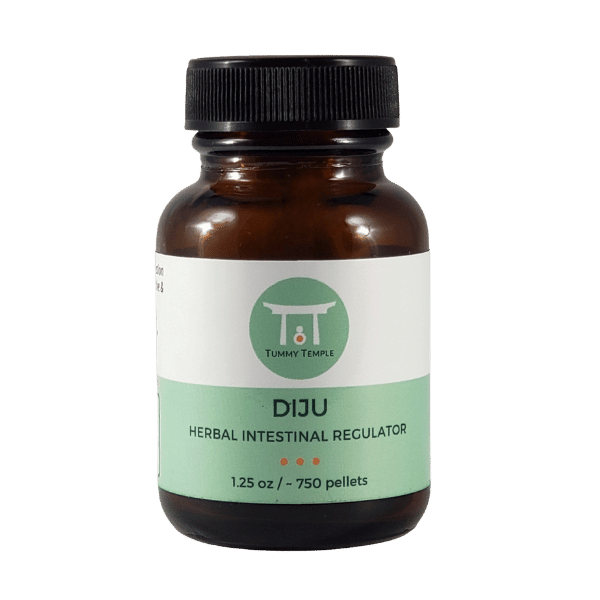
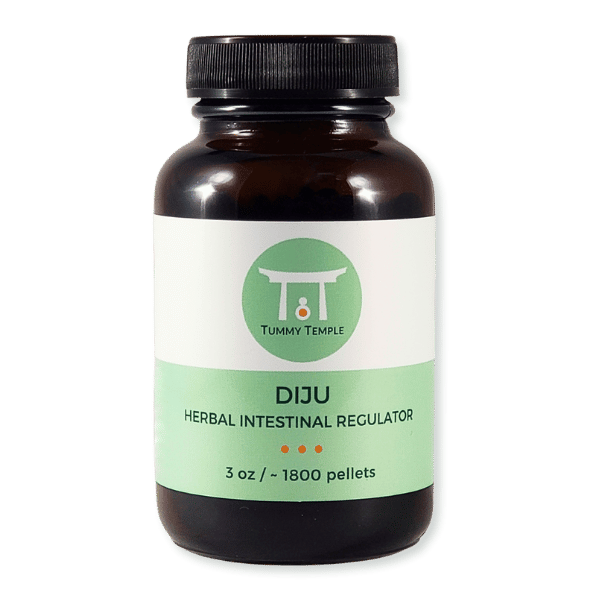
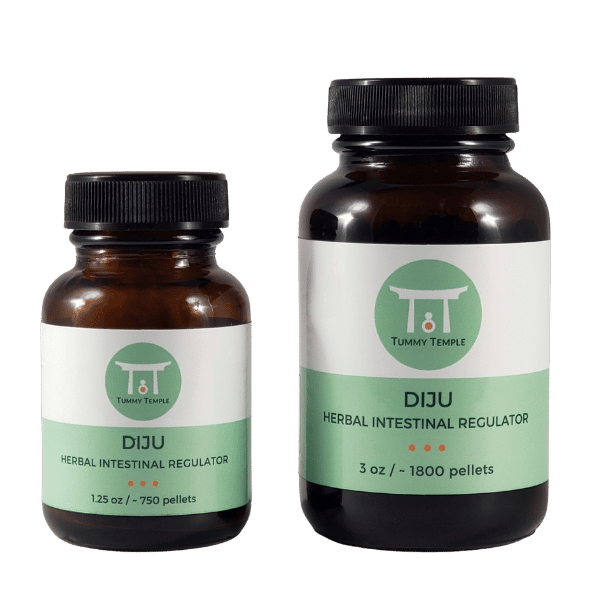
When stress has thrown your gut rhythm off, supporting elimination directly while you work on the underlying factors can help break the feedback loop. Diju is a botanical formula that supports comfortable, regular elimination — an effective option for those stretches when stress is running the show and the gut needs a little extra encouragement. It works best as part of a broader approach that includes the basics: movement, routine, hydration, and rest. Natural Approaches to Supporting Regularity has more on putting those pieces together.
Bottom Line
Stress and digestion are connected through a well-established, bidirectional communication system. When stress activates the sympathetic nervous system, digestion slows — which is why constipation clusters around demanding periods and why the gut often feels it before the mind fully registers the strain. Supporting the body through those stretches — with movement, consistent routine, slower eating, and nervous system-calming practices — tends to help both the stress and the digestion it disrupts.
For more on what else contributes to sluggish elimination and what to do about it, visit What Causes Constipation? Common Triggers Explained and Constipation Relief: The Ultimate Guide.